A closed replacement program does not clear an installed sprinkler
On September 24, 2026, the U.S. Consumer Product Safety Commission and Tyco Fire Products issued a renewed alert about previously recalled Central Sprinkler fire-sprinkler heads that may still be installed in homes, multifamily buildings, residential facilities and commercial properties. The affected O-ring sprinklers were manufactured from the mid-1970s through June 2001. They were recalled in July 2001, the program was modified in May 2003 and the replacement program closed on August 31, 2007 after millions of heads were replaced.
CPSC says minerals, salts and other contaminants can degrade the rubber O-ring seals and keep a sprinkler from activating during a fire. The program's closure is not evidence that a particular installed head was replaced, inspected or safe. The renewed notice cites a July 2025 assisted-living fire in Fall River, Massachusetts, where ten residents died and dozens were injured; it reports that the facility had not replaced dozens of recalled heads identified during an earlier inspection. That event does not diagnose another building, but it makes a records-only assumption unsafe.
Start with building records and a no-contact visual screen
Ask for the original sprinkler schedule, shop drawings, inspection reports, prior recall correspondence, invoices and completion records. Search for Central Sprinkler, Gem Sprinkler or Star Sprinkler references and for a documented O-ring replacement. A receipt for general alarm service, a passed smoke-alarm test or an insurance inspection does not by itself prove that every sprinkler head was identified and replaced.
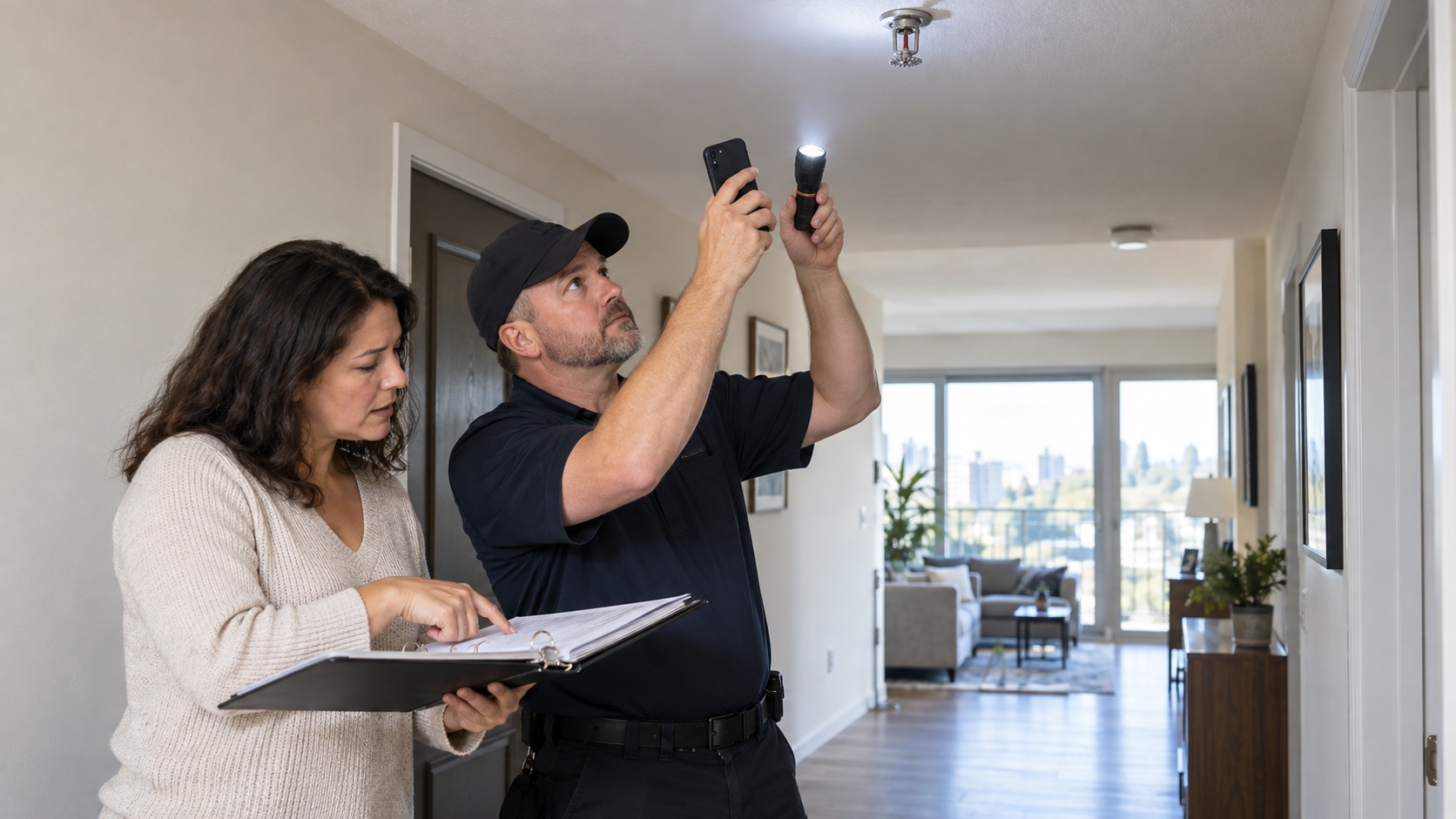
Use Tyco's current identification guide only for a preliminary screen. From the floor, photograph the visible deflector and markings with zoom if the location is safely accessible. Do not stand on furniture, paint or clean a head, hang anything from it, turn a valve, shut down the system, unscrew a sprinkler or probe the heat-sensitive element. Concealed, corroded, painted, high or ambiguous heads belong to a qualified fire-protection professional; a homeowner photo cannot establish an internal seal design or full system condition.
Treat Central O-ring and Omega evidence as separate recall records
The renewed 2026 CPSC–Tyco notice and Tyco's current page focus on previously recalled Central O-ring sprinkler heads. CPSC also maintains a separate older Omega sprinkler recall record. Product families, markings, dates and historical remedies should not be merged into one generic ‘old sprinkler’ conclusion. If records or markings suggest either group, provide the evidence to the professional and ask them to identify the exact manufacturer, model, orientation and applicable official notice.
The old Central O-ring replacement program and the historical Omega remedy are no longer open. Do not advertise a free replacement, reimbursement or manufacturer appointment unless a current official source confirms it for the specific case. Tyco's current Central O-ring notice gives an email route for questions, while CPSC directs owners to immediate inspection and qualified replacement. Obtain a written proposal that identifies the affected heads, code/authority coordination, impairment plan, replacement scope, testing, restoration and closeout documents before authorizing work.
Use a qualified fire-protection route and preserve continuous protection
CPSC says all building sprinklers should be inspected to determine whether recalled units are present and all recalled sprinklers should be replaced by a qualified fire-protection professional. A condominium owner or tenant should notify the HOA, landlord or facility manager because the system is normally shared building infrastructure. The responsible party should also coordinate with the local authority having jurisdiction and the building's fire-protection contractor before any system impairment; CoolCompare cannot identify a head, authorize a shutdown or determine local compliance.
While the case is being resolved, keep smoke alarms operational and maintain the building's emergency plan, but do not treat alarms as a substitute for a functioning sprinkler system. If there is a fire, smoke or an alarm, leave using the building's emergency procedure and call 911; do not return to inspect a sprinkler. Save the official notice, photographs, inspection report, exact replacement schedule, permit or authority records where applicable, test certificate and completion date in Project Passport so a future owner or manager can distinguish a verified replacement from an unanswered warning.
Sources and further reading
Questions or corrections? Contact the editorial team.