Start with five safe homeowner checks
Before changing settings or opening equipment, identify the system type and find the manufacturer instructions. Confirm that the thermostat is in the intended heating mode, review the accessible filter, keep return grilles and supply registers unobstructed, look from a safe distance for blocked outdoor-unit clearance, and check that the service area is not storing combustible material. These observations create a useful baseline; they do not prove that a component is healthy.
ENERGY STAR recommends checking filters monthly during heavy-use periods and replacing them when dirty, with three months as a minimum interval for many typical systems. The exact filter, interval and access method still come from the equipment and filter instructions. Do not remove service panels, bypass a switch, relight equipment contrary to its label, touch wiring or attempt refrigerant or combustion work. Record the date, filter size, thermostat mode and any unusual noise, odor or room imbalance in the Maintenance Passport.
Ask the technician for measurements—not a generic tune-up label
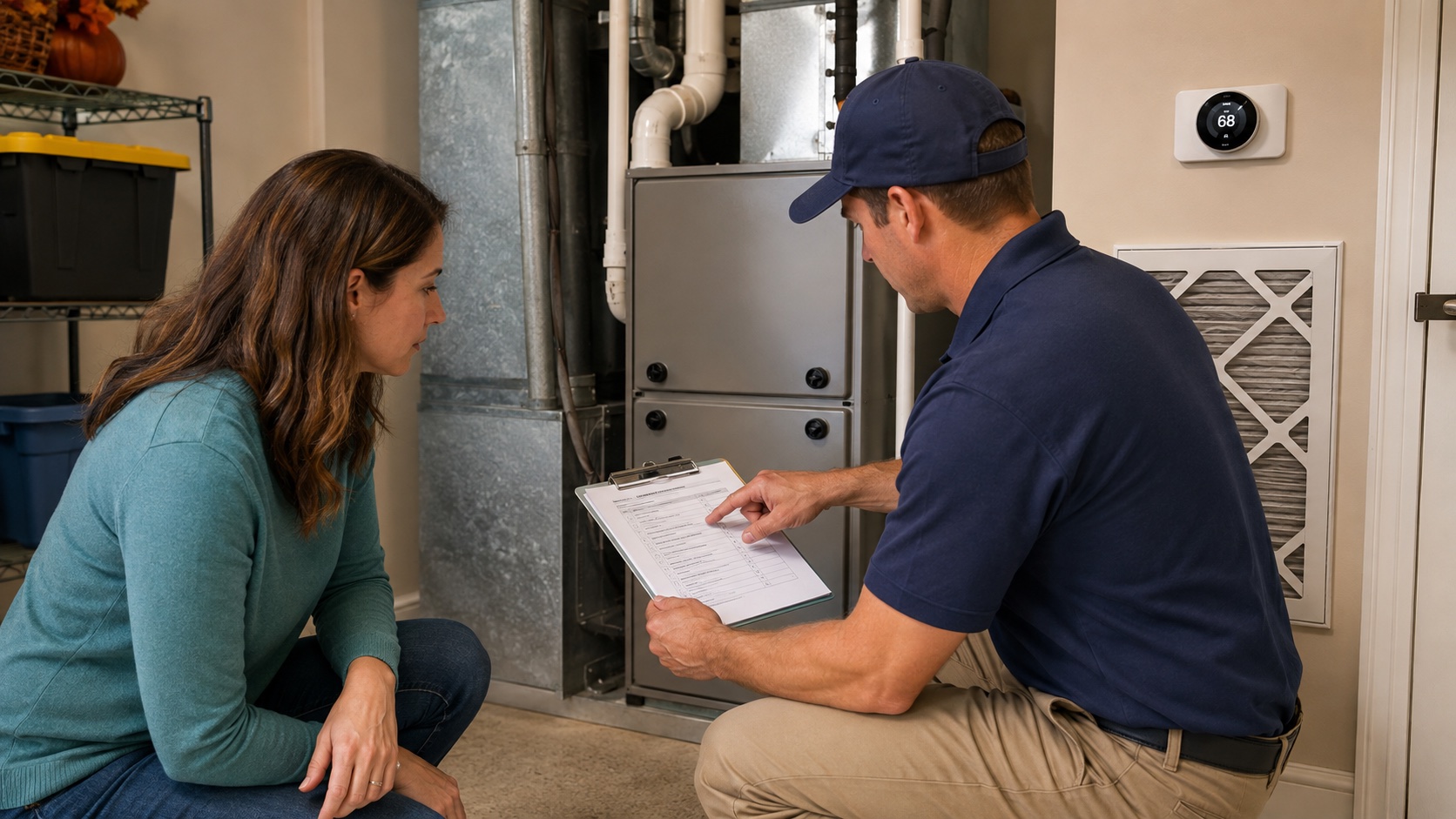
ENERGY STAR's current maintenance checklist describes a professional pre-season check as more than a visual visit. For applicable systems, ask the technician to document thermostat operation, the start-run-stop control sequence, electrical connections and motor readings, blower or airflow condition, and the heating-specific checks required by the exact equipment. A heat pump also needs its outdoor unit, defrost and auxiliary-heat controls considered; a furnace or boiler needs qualified fuel, burner, heat-exchanger and venting review.
The service record should distinguish observed condition, measured result, maintenance performed and recommended repair. Ask which manufacturer specification or safety limit supports any failed result, whether the system was tested in heating mode, and what remains outside the visit. A maintenance appointment is not a Manual J load calculation, duct redesign, permit inspection or guarantee against future failure. If the technician recommends replacement, carry the measured evidence, exact model numbers and written repair price into Repair or Replace rather than deciding from age alone.
Make carbon-monoxide and cold-weather safety a separate plan
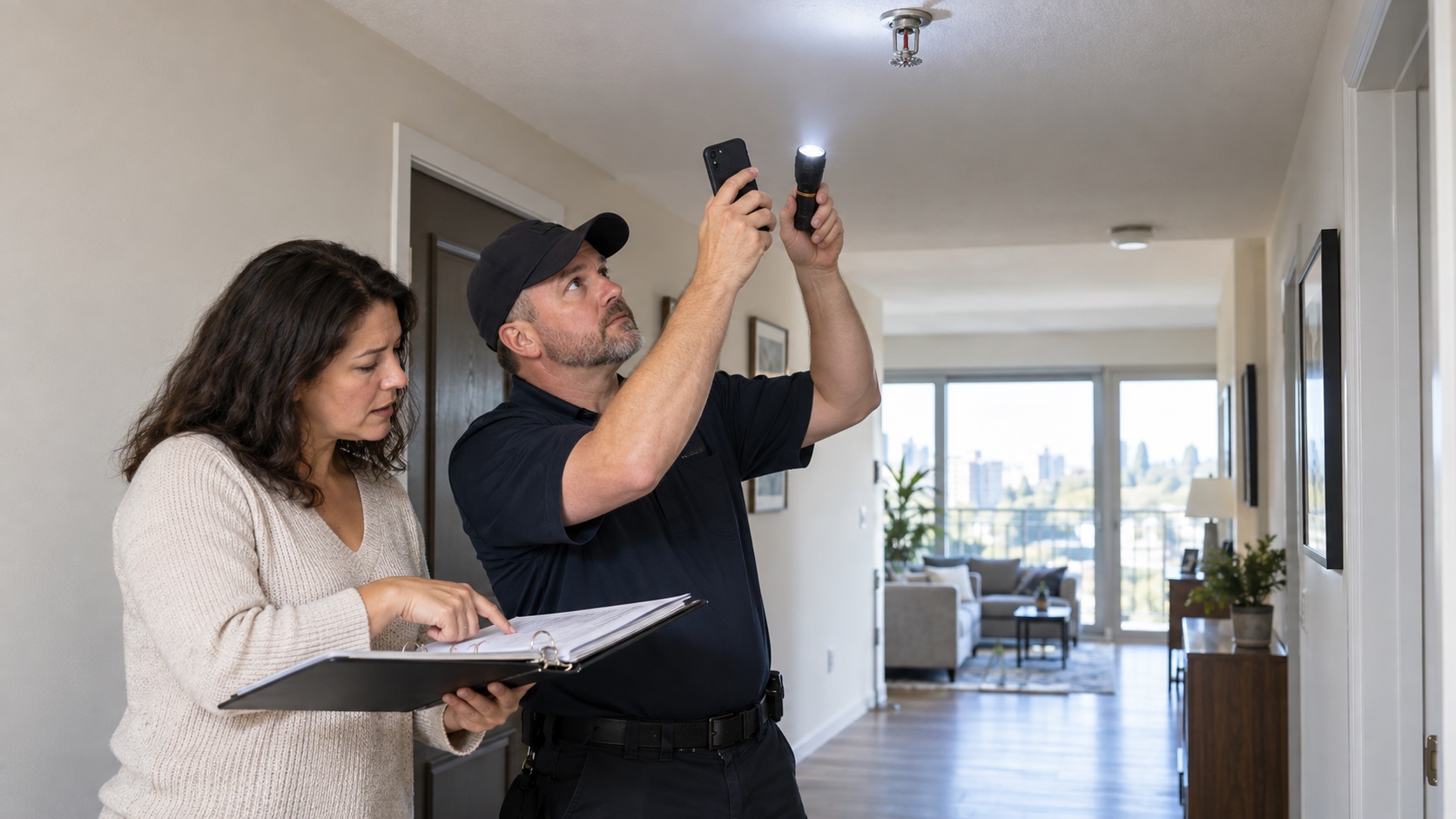
For homes with a fuel-burning furnace, boiler, fireplace, water heater or attached garage, carbon-monoxide protection is not a substitute for appliance maintenance, and maintenance is not a substitute for working alarms. CPSC recommends CO alarms on every level and outside sleeping areas, installed and tested according to their instructions. Test alarms monthly, check the replacement or end-of-life date and never use an oven, range or unvented outdoor appliance to heat the home.
If a CO alarm sounds or occupants have possible carbon-monoxide symptoms, move to fresh air and call 911; do not stay inside to troubleshoot. If you smell gas, follow the serving utility's emergency instructions from a safe location. Separately, make a no-heat plan for people, pets, pipes and temperature-sensitive equipment before severe weather: identify a safe heated destination, keep utility and qualified-service contacts available, and never claim that an appointment or contractor is available until it is confirmed.
Close the visit with a record you can use
Before paying, collect the service date, company and technician, exact equipment served, findings, measurements, parts installed, settings changed, unresolved risks and next due date. Preserve photos only when they do not expose personal information. Keep the invoice and original documents outside CoolCompare as the controlling records, then use the Maintenance Passport to track filter and service timing on this device.
Do not turn a clean checklist into a savings estimate. ENERGY STAR states that maintenance supports performance, but the effect on one household depends on the equipment condition, weather, thermostat settings, ducts and building load. Compare actual same-season bills and comfort observations when evaluating a change. If the visit uncovers a major repair, use Project Passport to keep the repair option, replacement bids, financing terms and final outcome on one evidence trail.
How this guide was produced
CoolCompare Editorial reviewed 3 linked evidence sources and separated source facts from homeowner checks, calculations and limitations. This page does not claim hands-on product testing, professional inspection or address-specific verification unless the article explicitly documents it.
Reviewed 8 September 2026. See the editorial policy, fact-checking standard and corrections process.
Sources and further reading
Questions or corrections? Contact the editorial team.