First establish whether the system can operate off-grid
A standard grid-connected rooftop solar installation usually shuts down when the grid fails. The Department of Energy explains that this protects utility workers and prevents uncontrolled electricity from flowing into a damaged grid. Panels on the roof alone do not mean that the home's outlets, heat pump or air conditioner will work during an outage.
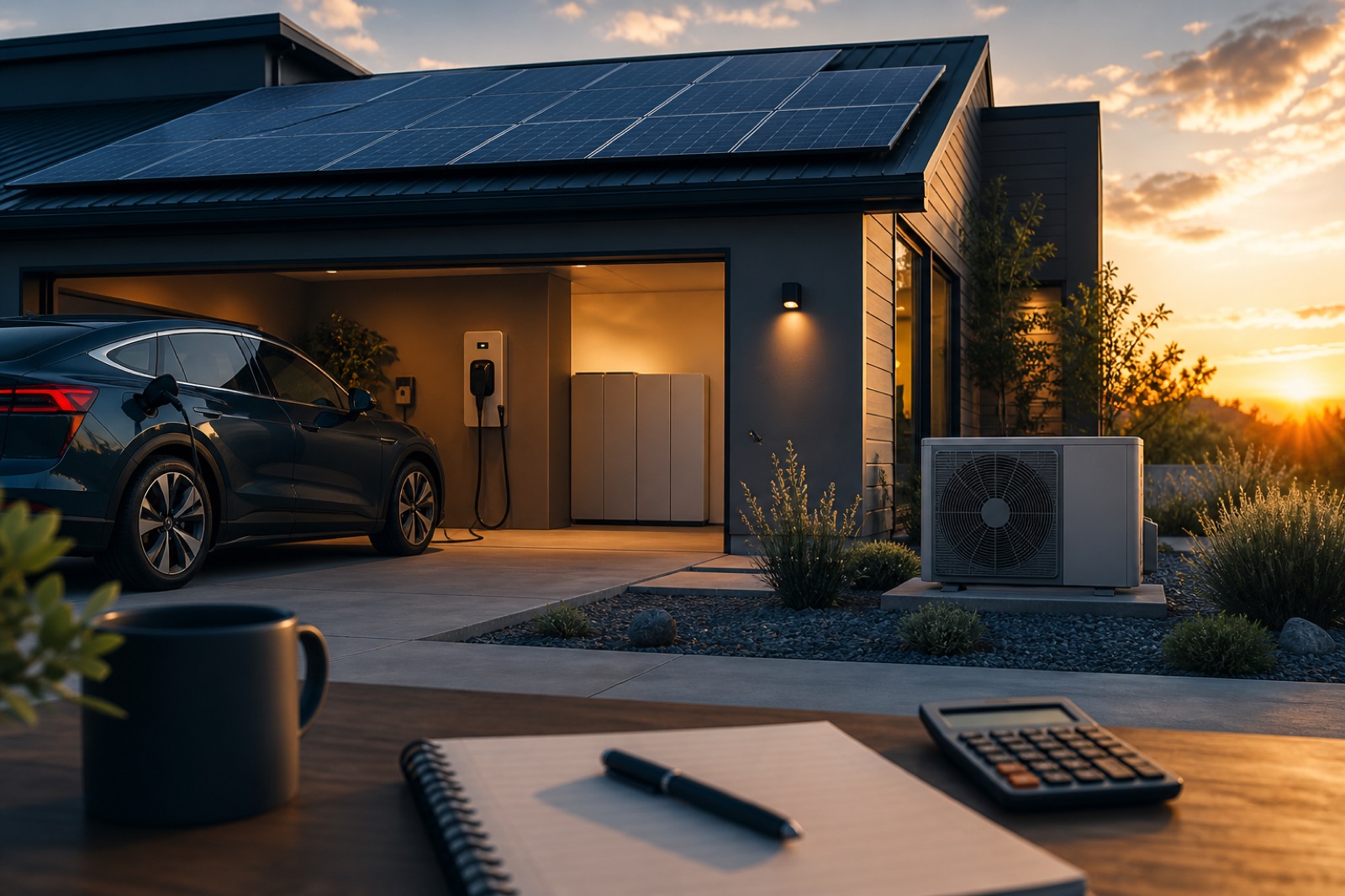
Backup operation requires a system specifically designed and installed to separate from the grid, often called islanding, and to supply selected loads through a compatible inverter and storage arrangement. Ask the installer to identify the exact inverter, battery, transfer or isolation equipment and backed-up circuits on the one-line diagram. A marketing phrase such as ‘battery ready’ does not prove the proposed configuration will run the HVAC system. Local electrical rules, utility interconnection and inspection still apply.
Separate power from energy before comparing batteries
Electric power, measured in kilowatts (kW), describes how much can run at once; energy, measured in kilowatt-hours (kWh), describes how much is stored or used over time. The Energy Information Administration explains this distinction. A battery's usable kWh rating does not tell you whether its inverter can deliver enough continuous power or handle the starting demand of a compressor. Likewise, an inverter's kW rating does not tell you how many hours a given load will run.
For an illustrative planning calculation only, a measured 1 kW load running continuously for five hours uses 5 kWh before conversion losses and reserve settings. Real HVAC demand cycles, changes with weather and may include startup peaks. Do not turn that arithmetic into a promised backup duration. Request manufacturer specifications for continuous and surge output, usable stored energy, operating-temperature limits, reserve settings and the proposed battery count. Have a qualified designer check the actual equipment, not just a generic tonnage label.
List every load needed for useful heating or cooling
A central system may need more than its outdoor unit: indoor blower or air handler, thermostat, controls, condensate equipment and sometimes auxiliary electric resistance heat. A gas furnace still needs electricity for controls and the blower. A ductless system has indoor and outdoor components. Which loads are backed up, and whether they can start together, depend on the exact models and wiring. Ask the contractor to record nameplate and measured running and starting requirements where appropriate, then map each required circuit to the backup panel or whole-home design.
Prioritize a realistic critical-load plan rather than assuming whole-home comfort. The proposal should say whether cooling, heating, only one zone, or neither is included in outage mode; what happens when the battery reaches its reserve; whether solar can recharge storage while islanded; and how the system restarts when the grid returns. Performance during a long, cloudy, very hot or very cold outage cannot be guaranteed by a simple annual solar-production estimate. If a household depends on electrically powered medical equipment or cannot safely tolerate extreme temperatures, maintain a separate emergency plan and follow local emergency advice.
Get the outage claim and closeout evidence in writing
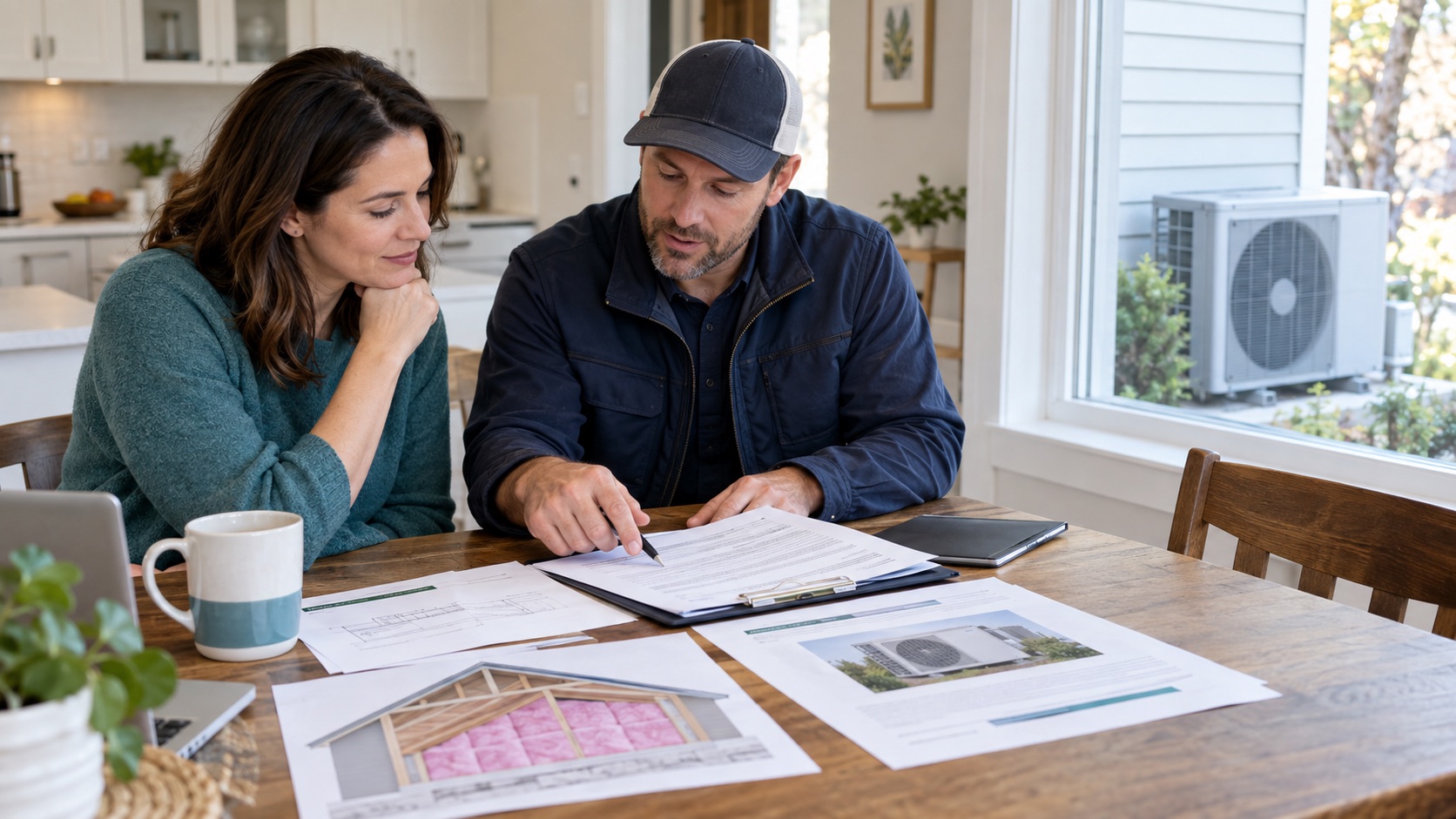
Before signing, request a circuit schedule, exact PV/inverter/battery models, usable energy and power ratings, HVAC model and auxiliary-heat treatment, load-management assumptions, estimated runtime scenario with weather and starting-state assumptions, exclusions, permit and utility-approval responsibilities, commissioning procedure, warranty limits and the cash and financed totals. Compare a smaller critical-load design with a whole-home proposal on the same basis. Neither a solar payback estimate nor a battery price alone measures resilience value.
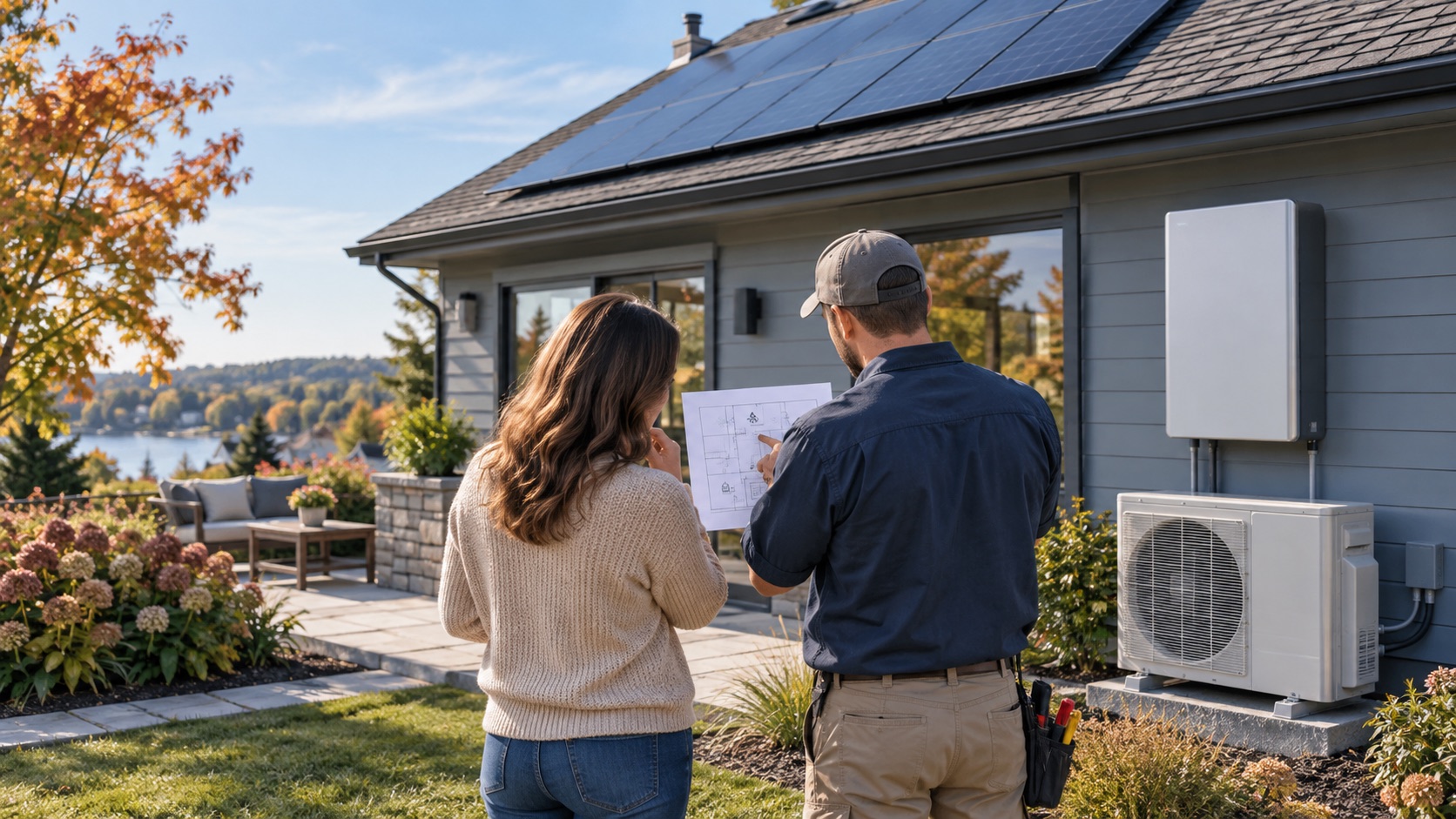
At handoff, request the approved diagram, inspection and interconnection documents, final equipment serial numbers, owner instructions and a witnessed demonstration of the manufacturer-approved outage mode. Do not open electrical panels, defeat interlocks or test by disconnecting utility equipment yourself. A portable generator is a separate safety decision: the Consumer Product Safety Commission warns that carbon monoxide can kill quickly and says to operate generators outdoors, at least 20 feet from the home, with exhaust directed away. Use the solar project and Decision Room tools to organize your own scope and costs; they do not certify a backup design.
Sources and further reading
Questions or corrections? Contact the editorial team.