Stop using the exact RWX-RBP02 battery pack
On September 24, 2026, the U.S. Consumer Product Safety Commission recalled about 51,000 The Blue Cactus Company 2500 mAh battery packs for reclining chairs. The notice says the lithium-ion pack can overheat and create fire and burn hazards. CPSC had received four reports of packs overheating, smoking or igniting. Those reports do not predict the condition of an individual pack and should not be used as a reason to test a possible match.
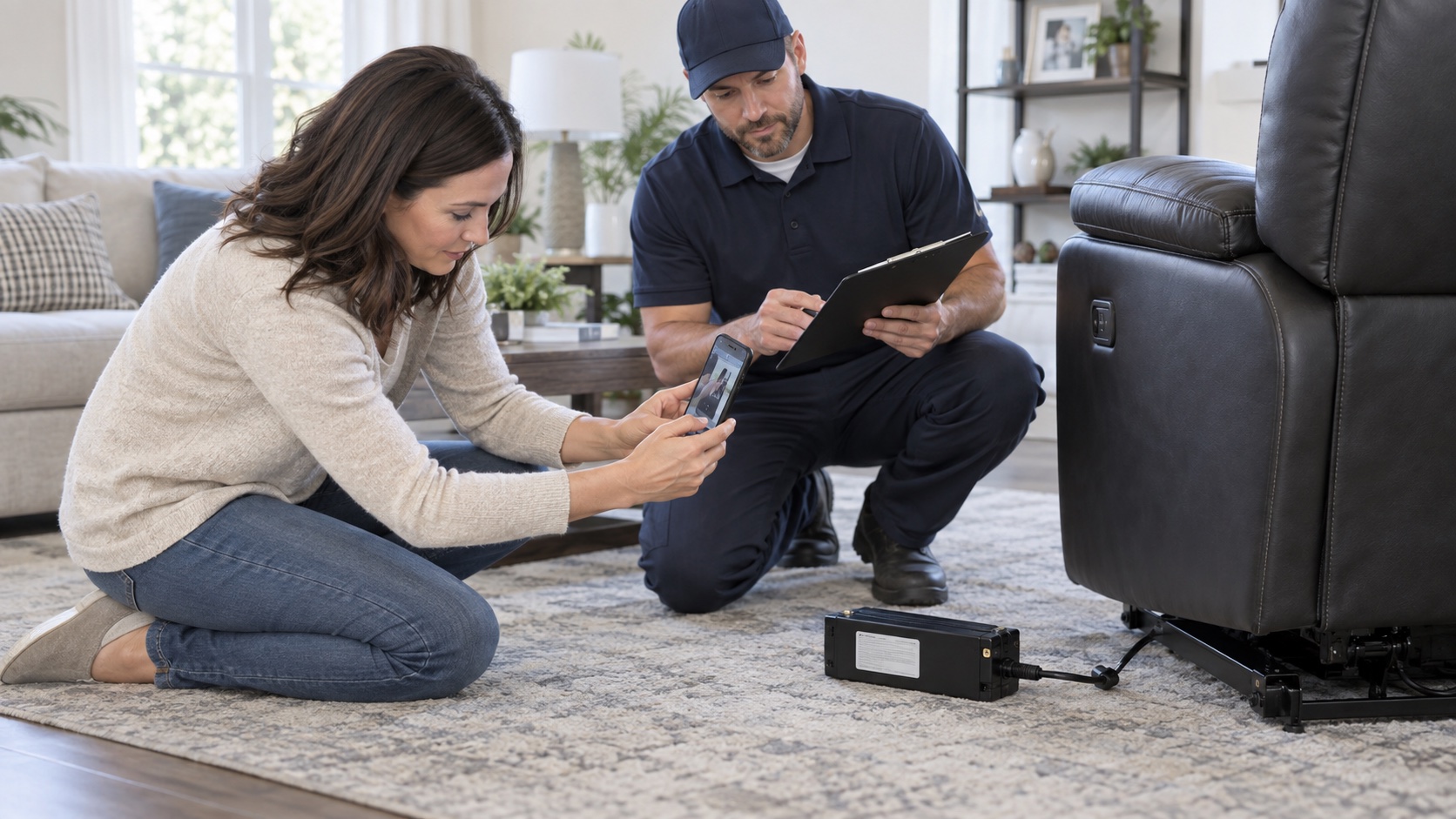
The recalled model is RWX-RBP02, printed on the rear of the black battery pack. CPSC says the packs can be used with various reclining-chair brands, so the chair brand, upholstery or appearance does not establish coverage. The affected packs were sold on Amazon from May 2023 through July 2026 for about $105. Stop using a confirmed match immediately and begin with the CPSC notice or the manufacturer's official recall page rather than an advertisement or marketplace message.
Identify the pack without creating another hazard
If the pack is cool, intact and safely visible, photograph the exterior front and rear labels, the model number, purchase record and installation location without opening the housing, touching exposed terminals or attempting a repair. Do not charge or operate it to see whether it becomes warm. A recliner label is not a substitute for the battery-pack model, and a similar black pack is not proof that the recall applies.
If a battery is hot, swollen, smoking, hissing, leaking or giving off an unusual odor, do not touch, carry or disconnect it merely to obtain a photograph. Move people away, leave the area if conditions are unsafe and call 911 for smoke, fire or immediate danger. Do not puncture the pack, open its case, place it in water or improvise a cooling, shipping or disposal method. CoolCompare cannot determine whether a battery is safe to handle.
Use the official no-cost replacement route and keep the case record
CPSC's published remedy is a replacement. The Blue Cactus Company says affected consumers are eligible for a no-cost replacement and provides the current claim route on its official site. Record the date, exact model, order evidence, photographs submitted, case number and written instructions. A submitted form is not a completed remedy; preserve the replacement confirmation and the date the replacement pack is received.
Begin at the CPSC recall page or the manufacturer's own domain to reduce the risk of copied phone numbers, paid search pages or unsolicited messages. Do not mail, ship or hand a lithium-ion pack to a carrier unless the recall administrator supplies an authorized process that complies with the carrier's rules. Save the recall notice, claim correspondence, replacement details and final handling record in Project Passport for the household and a future owner.
Do not put a recalled lithium-ion pack in ordinary trash or battery bins
CPSC specifically says not to put this recalled battery in household trash, curbside recycling, general recycling streams, or the used-battery collection boxes found at retail and home-improvement stores. Contact the local household hazardous-waste facility first and ask whether it accepts recalled lithium-ion batteries. If it does not, contact the municipality for instructions. Do not leave the pack at a collection point without confirmation.
EPA's general household guidance also keeps lithium-ion batteries out of municipal trash and curbside recycling because they can start fires when damaged or crushed. For this product, however, the CPSC recall instructions and the manufacturer's case-specific directions take priority over a generic battery-recycling checklist. Do not transport a hot, smoking, swollen or otherwise damaged pack; ask the recall administrator, local fire authority or hazardous-waste program how to handle the specific condition safely.
How this guide was produced
CoolCompare Editorial reviewed 4 linked evidence sources and separated source facts from homeowner checks, calculations and limitations. This page does not claim hands-on product testing, professional inspection or address-specific verification unless the article explicitly documents it.
Reviewed 28 September 2026. See the editorial policy, fact-checking standard and corrections process.
Sources and further reading
Questions or corrections? Contact the editorial team.