This is a stop-use warning for three named models
On September 24, 2026, the U.S. Consumer Product Safety Commission warned consumers to stop using FOTING electric pressure washers immediately. CPSC names models KLC-T2, KLC-T3 and KLC-PRO150C. It says the products lack an integrated immersion-protection device on or near the plug—also called a ground-fault circuit interrupter, or GFCI—and lack an adequate-length power cord, creating shock and electrocution hazards.
CPSC reports one complaint about a missing GFCI and six complaints that the cord was too short; it reports no injuries. Those counts do not show that a particular machine is safe to test. The agency says Success Way Ltd. has not agreed to an acceptable recall, so this is a product-safety warning rather than a refund or repair program. Do not advertise or expect a manufacturer remedy that the official notice does not provide.
Match the exterior model before handling the power cord
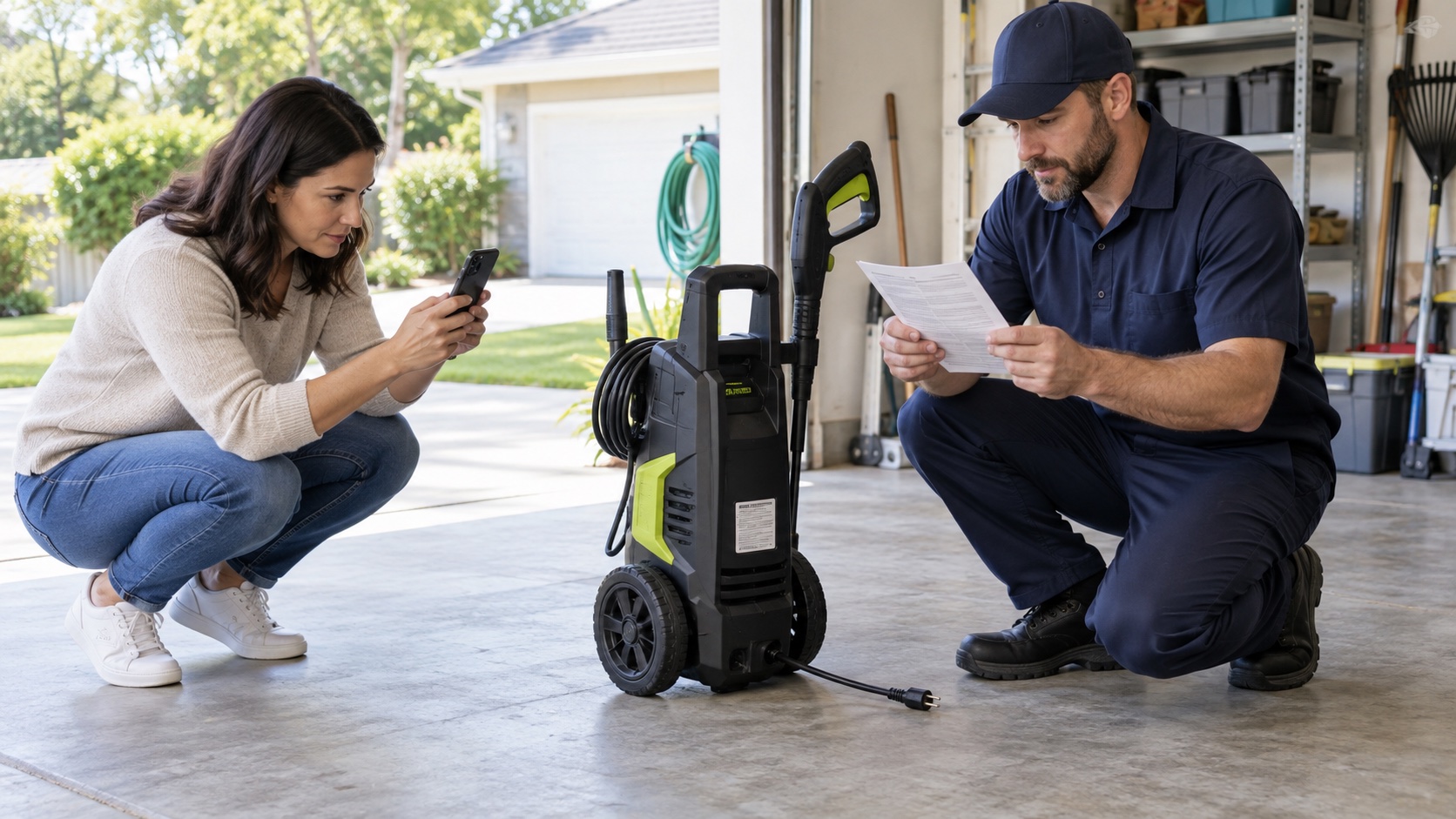
The official notice shows the three model names but says the machines were sold in various colors and with various accessories, including four quick-connect nozzles and foam cannons. Color, retailer, nozzle count or a similar shape cannot establish coverage. Photograph a safely visible exterior model label and the plug only when the equipment is already unplugged, dry, inactive and away from standing water. Do not energize the machine to inspect it or test whether an outlet trips.
If the plug, cord, machine, floor or your hands are wet—or if the cord is damaged, hot, sparking or still energized—do not touch the washer or reach through water to unplug it. Keep people away and use emergency services for smoke, fire, shock or immediate danger. A qualified electrician can determine a safe de-energization route when the plug is inaccessible or conditions are uncertain. CoolCompare cannot inspect wiring or determine that a machine is safe to handle.
An outlet GFCI does not convert a warned product into an approved one
OSHA explains that a GFCI compares current leaving and returning through a circuit and can interrupt a ground fault very quickly. It also explains that GFCIs do not protect against every electrical hazard, including direct contact with line conductors. A receptacle GFCI, portable adapter, dry footwear or a longer extension cord therefore does not cancel CPSC's stop-use direction for these FOTING models.
Do not replace the plug, splice the cord, add a portable GFCI, open the housing or ask a repair shop to improvise a modification as a substitute for an official remedy. Do not sell, donate or give the washer away. CPSC says the missing integral protection and inadequate cord are product hazards; the decision is not a generic inspection of the home's outdoor outlet.
Follow the destruction instruction only after safe de-energization
CPSC directs consumers to unplug the washer, destroy it by cutting the power cord and dispose of it. Cutting a cord is never a de-energization method: the plug must already be removed from power, the equipment and surrounding area must be dry, and there must be no damaged or uncertain electrical condition. Do not cut a hardwired conductor, a connected cord or any cable in a wet area. If those safe preconditions are not clearly met, stop and ask a qualified electrician or local waste authority how to proceed.
Before disposal, check the municipality's rules for an appliance with electrical components; do not assume curbside collection accepts it. Save the CPSC warning number 26-795, exterior model photo, retailer/order record if available, disposal instructions and completion date in Project Passport. If an incident or product defect occurred, CPSC directs consumers to SaferProducts.gov. This record distinguishes a completed response from a machine that was merely set aside or passed to someone else.
How this guide was produced
CoolCompare Editorial reviewed 3 linked evidence sources and separated source facts from homeowner checks, calculations and limitations. This page does not claim hands-on product testing, professional inspection or address-specific verification unless the article explicitly documents it.
Reviewed 29 September 2026. See the editorial policy, fact-checking standard and corrections process.
Sources and further reading
Questions or corrections? Contact the editorial team.