The national count shows program activity—not proof for one address
The Department of Energy's Home Energy Score page reported 312,161 completed scores as of September 13, 2026. That is a measured program total shown by DOE; it is not a count of currently listed homes, a guarantee that every score is still current, or evidence that a specific address has an official report. DOE describes the score as an asset-style rating from 1 to 10 based on the home's structure and heating, cooling and hot-water systems.
A score is designed to make homes comparable under standardized assumptions. It is not the household's measured utility use: occupants, thermostat settings, weather, energy prices and plug loads can make bills differ from the modeled estimate. It also does not replace a home inspection, equipment diagnosis, combustion-safety check, indoor-air-quality assessment, appraisal or code review. Ask for the complete address-specific report before using a score in an offer, repair request or ownership budget.
Match the report to the house and assessment event
Confirm the property address, assessment date, assessor and partner organization, report or assessment type, scoring-tool version, conditioned floor area and the listed construction and equipment facts. DOE's sample report distinguishes an official score from a home facts page and an improvement scenario. Treat a screenshot, listing badge or verbal score without the underlying report as incomplete evidence.
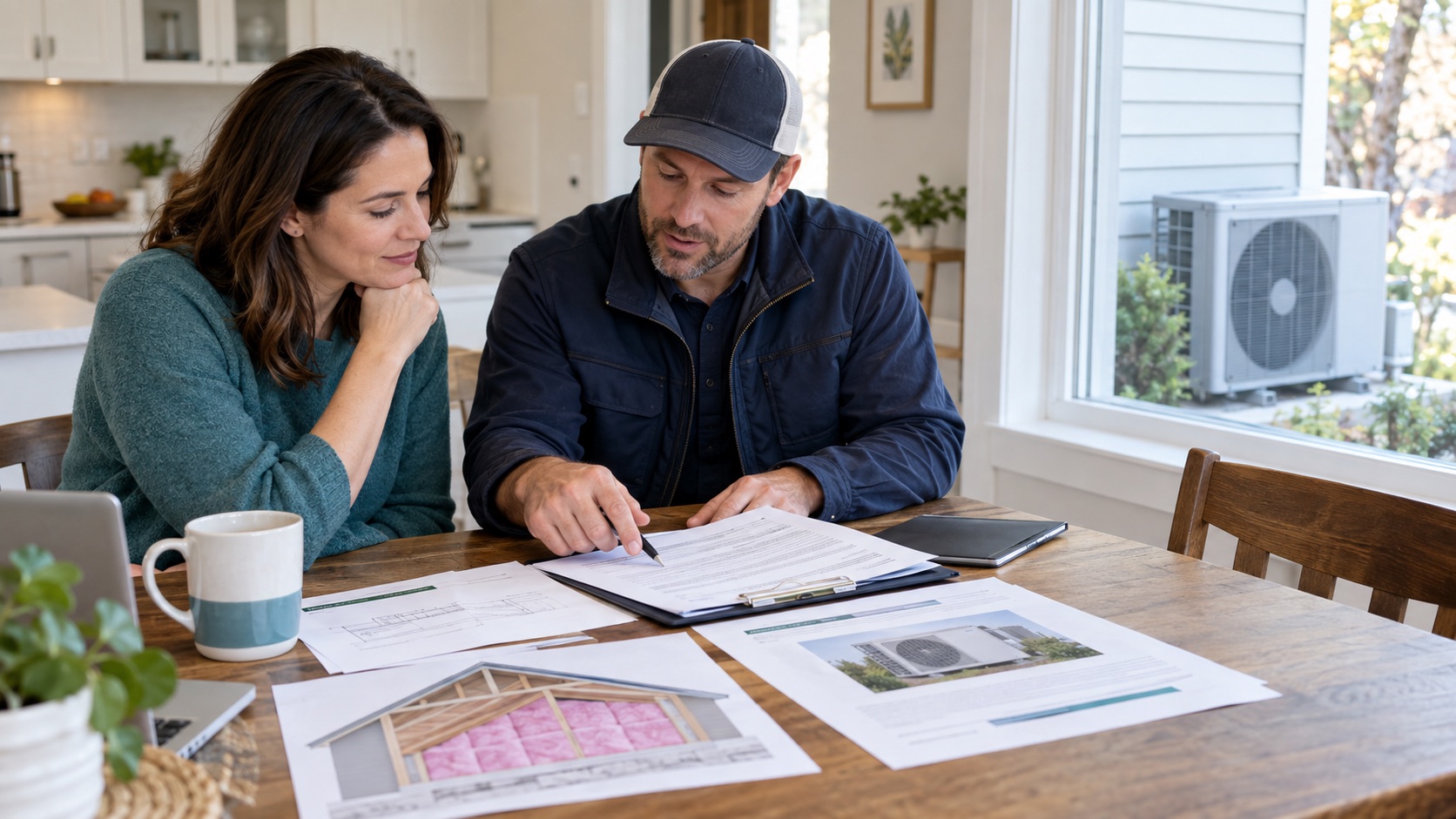
Compare the report's inputs with the inspection and seller records: floor area, foundation, attic and wall insulation, window type, duct location, heating and cooling equipment, water heater and any onsite generation. A wrong system type, missing addition or replaced appliance can change the model. Ask whether the report is an initial, corrected or post-improvement assessment and whether the assessor revisited the home after work. CoolCompare does not authenticate a report or recalculate DOE's score.
Read the improvement score as a scenario, not completed work
The score report can show a current score and a possible score after recommended improvements. The higher figure is a modeled scenario, not proof that the work was completed, permitted, commissioned or cost-effective for this buyer. Request invoices, permits, model and serial numbers, warranty records and test results for any measure the seller says has already been installed.
For work that remains, separate the report's estimated energy use and savings from current contractor prices, financing, utility tariffs and incentive eligibility. Get a written scope for air sealing, insulation, ducts, electrical work and equipment replacement; then compare cash price, financed total, maintenance and remaining useful life. If envelope work changes heating or cooling loads, require updated sizing before selecting replacement equipment. Do not convert the score into a promised utility bill, sale-price premium or payback period.
Verify the assessor route and preserve a buyer decision record
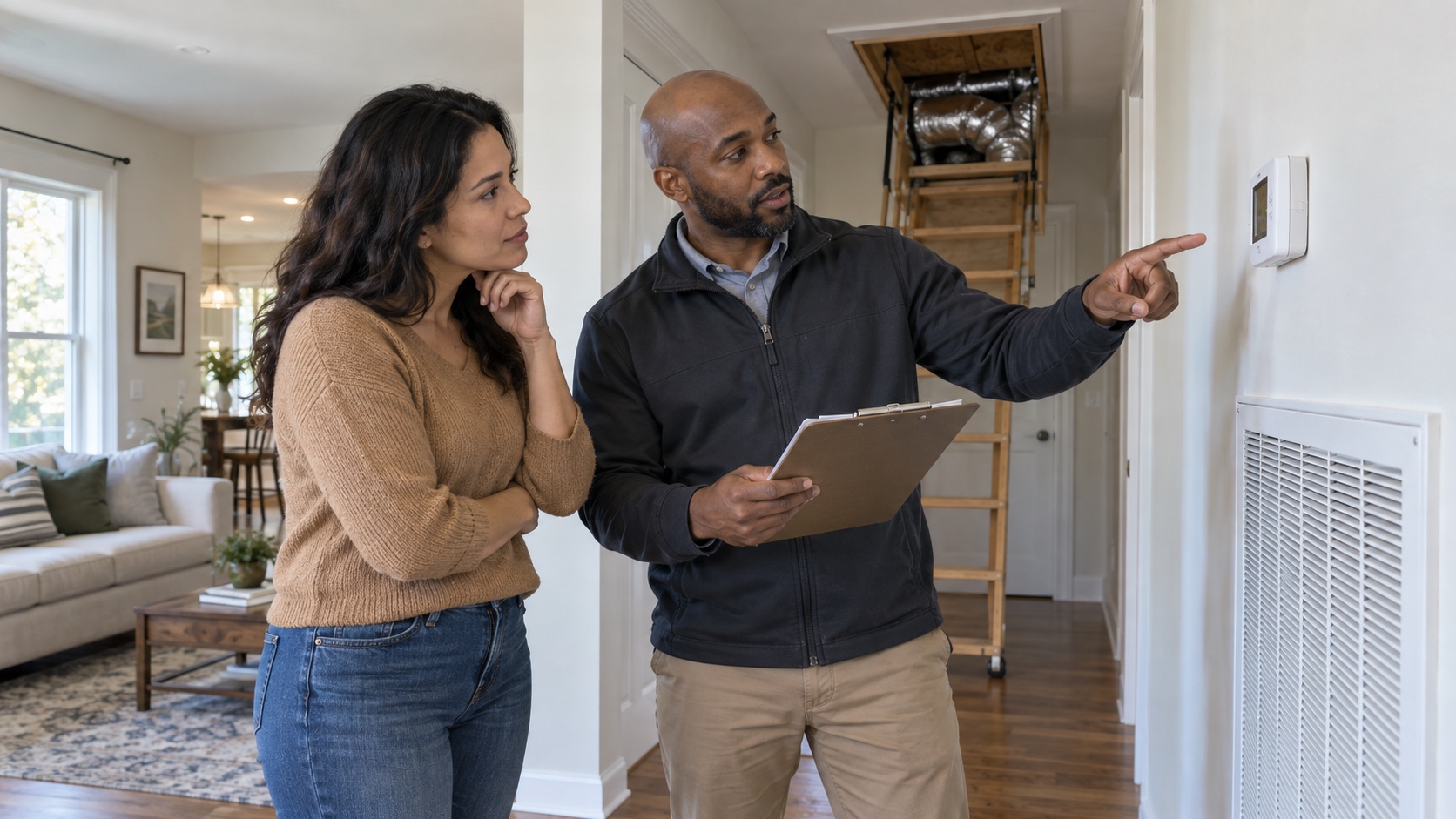
DOE says official scores are delivered through program partners by qualified assessors. Its public map can help locate participating partners and assessors by ZIP, but DOE notes that the directory only shows participants who opted into the searchable database. No nearby result therefore does not prove that the program or an assessor is unavailable. DOE's partner guidance requires quality assurance that includes re-scoring a random sample of at least 5% of homes, but that program control is not a warranty for a house or its systems.
Save the full report with the inspection, seller disclosures, permits, equipment records and quotes. Record which facts were verified, which improvements are only proposed and which costs are user-entered estimates. Use the Home Sale HVAC Report to organize system age and evidence, then use Energy Waste Score to prioritize observed envelope, duct and equipment checks. These CoolCompare tools support decision organization; they do not issue a DOE Home Energy Score or certify a home's condition.
Sources and further reading
Questions or corrections? Contact the editorial team.