Start with the room, not the efficiency claim
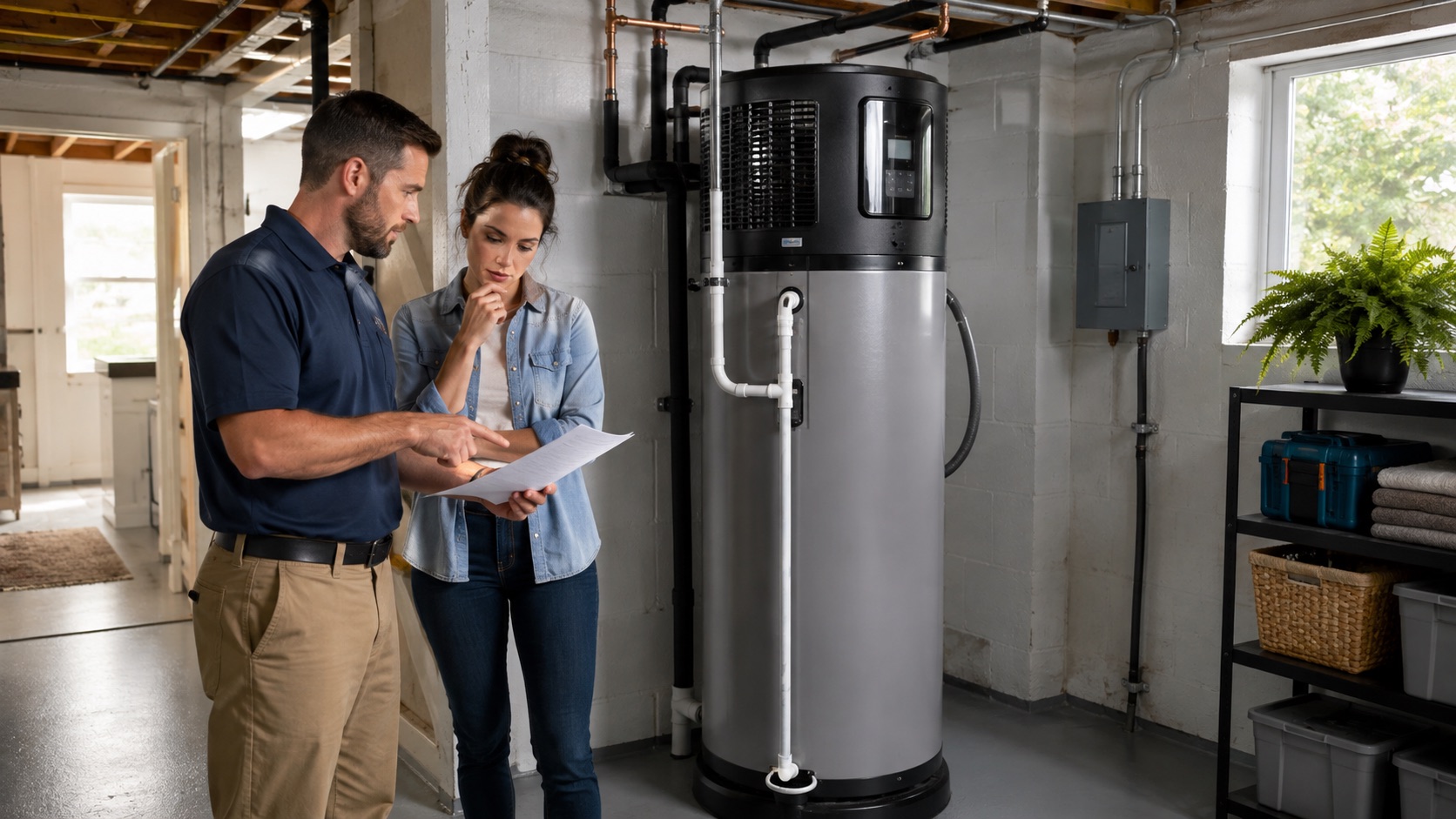
A heat-pump water heater moves heat from the surrounding air into the tank, so its location is part of the system. ENERGY STAR's current consumer guidance says integrated units should generally be placed in an interior space that stays between 40°F and 90°F year-round and provides about 1,000 cubic feet of surrounding air. That is roughly a 10-by-10-foot room with a 10-foot ceiling; it is a planning illustration, not permission to ignore the exact model manual.
A smaller closet is not automatically disqualified, but the proposal must explain how the selected model's intake and exhaust requirements will be met—such as transfer grilles, louvered doors or manufacturer-approved ducting. Record whether the room is conditioned, how cold it becomes in winter and whether cooling or dehumidifying that room is useful or creates a comfort penalty. Never assume a generic air-volume rule overrides local code or listed clearances.
Put nine installation facts in every quote
Ask each bidder to write down: (1) exact model and tank capacity; (2) first-hour rating or another recovery measure appropriate to household demand; (3) room temperature and air-volume assumptions; (4) intake, exhaust and service clearances; (5) electrical circuit, breaker and wiring scope; (6) condensate route, drain or pump; (7) drain pan, leak protection and temperature-and-pressure relief discharge; (8) sound and nearby-room impact; and (9) removal, permit, startup, warranty registration and owner instruction. Mark any unknown item as an allowance or clarification—not included by silence.
ENERGY STAR recommends starting with the capacity of the existing storage heater, but gallon size alone does not establish recovery performance. Household peak use, incoming-water temperature and operating mode matter. In colder conditions or during heavy demand, a hybrid unit may rely more on electric-resistance backup. Ask how the proposed model serves consecutive showers or simultaneous uses, and compare that written assumption across quotes rather than treating the efficiency label as a hot-water guarantee.
Plan access, maintenance and the real project total
The finished installation should leave the controls, air filter, data ports, plumbing connections and tank drain serviceable. ENERGY STAR's installation guidance also calls for an unobstructed air path and access to inspect and drain the unit. Before final payment, collect the exact model and serial number, permit or inspection record where applicable, settings, startup checks, warranty terms and final invoice. Add filter inspection and condensate-path checks to the maintenance record.
Separate the equipment price from the complete project. Panel or circuit work, condensate pumping, drain-pan changes, ducting, plumbing modifications, seismic restraint, permit fees and removal can change the total. Incentives must be verified for the address, purchase date, exact certified model and funding status before purchase; CoolCompare does not treat a product page or potential rebate as an approval. Use the water-heater comparison first, then carry the chosen scope into the total-project-cost tool.
How this guide was produced
CoolCompare Editorial reviewed 3 linked evidence sources and separated source facts from homeowner checks, calculations and limitations. This page does not claim hands-on product testing, professional inspection or address-specific verification unless the article explicitly documents it.
Reviewed 5 September 2026. See the editorial policy, fact-checking standard and corrections process.
Sources and further reading
Questions or corrections? Contact the editorial team.