Start with measured defects
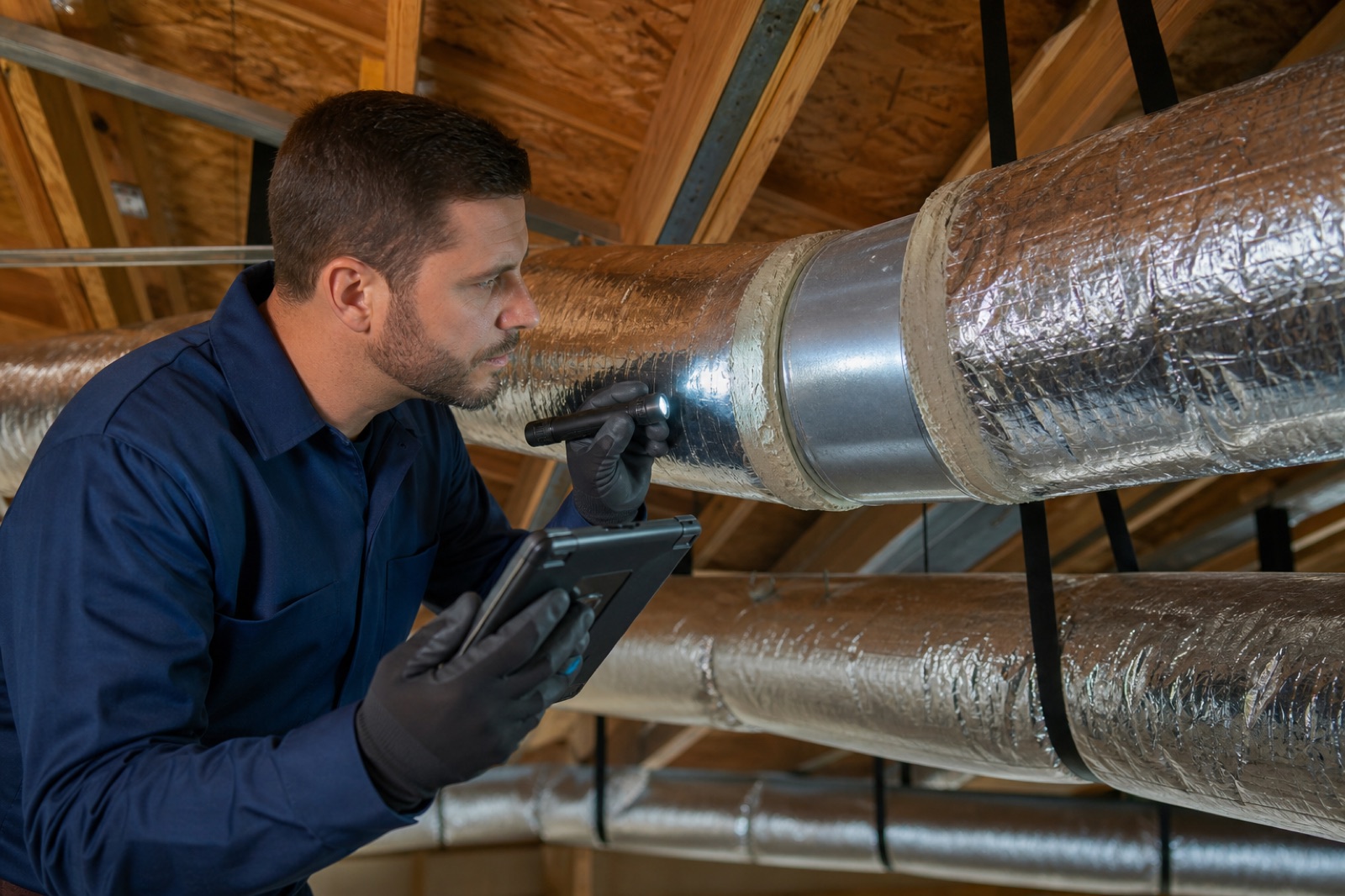
Uneven rooms, dust, noise or high bills can involve ducts, but those symptoms do not identify one cause. Ask for visual findings plus appropriate leakage, static-pressure and airflow measurements. Record disconnected sections, crushed flex duct, undersized returns, damaged insulation, inaccessible cavities and any moisture source separately.
A proposal should distinguish leakage to outdoors from leakage that remains inside conditioned space. It should also explain whether the problem is a local connection, a distribution-design issue or deteriorated material across a larger area. Do not authorize broad replacement from a photograph of one joint alone.
Match the remedy to the finding
Targeted repair may be appropriate for accessible disconnected or damaged sections. Sealing should name the materials, locations and verification method. Replacement may be rational when layout, sizing, extensive damage, inaccessible failures or a major equipment change makes isolated repairs unable to meet the airflow plan.
Compare supply and return scope, register and grille changes, balancing dampers, insulation level, vapor control in humid spaces, fire or smoke requirements, access restoration and disposal. Cloth-backed household duct tape is not a durable substitute for materials and methods approved for HVAC duct systems.
Verify performance after the work
The closeout should show what was repaired, sealed or replaced and provide before-and-after test results when testing was part of the promised scope. Airflow, static pressure, filter fit, cabinet connections and room balance should be reviewed with the system operating under documented conditions.
Ductwork in attics, crawlspaces and garages can intersect insulation, moisture, combustion safety and local code requirements. Confirm permits or inspection with the authority serving the address, and avoid treating a national planning range as a quote for concealed construction work.
Price access and restoration separately
A duct price should identify how crews reach the work and what they restore afterward. Ask about attic or crawlspace access, ceiling openings, insulation removal and replacement, fire stopping, patching, painting and disposal. Separate these items from the air-distribution scope so an apparently low proposal does not depend on unpriced finish work.
Visible staining or debris does not by itself establish mold, asbestos or another hazard. Stop and use appropriately qualified assessment when suspect materials or persistent moisture are present. The duct contractor should correct documented distribution defects while the responsible trade addresses roof, plumbing, drainage or building-envelope sources.
How this guide was produced
CoolCompare Editorial reviewed 3 linked evidence sources and separated source facts from homeowner checks, calculations and limitations. This page does not claim hands-on product testing, professional inspection or address-specific verification unless the article explicitly documents it.
Reviewed 19 August 2026. See the editorial policy, fact-checking standard and corrections process.
Sources and further reading
Questions or corrections? Contact the editorial team.