Start with your main heating fuel and region—not the national headline
The U.S. Energy Information Administration published its 2026–27 Winter Fuels Outlook on October 6, 2026. EIA expects average household winter expenditures to move in different directions: lower for many homes primarily heated with natural gas or propane, higher for homes primarily heated with electricity or heating oil. The forecast was completed October 1 and will be updated with later Short-Term Energy Outlook releases. It is a conditional forecast, not a measured winter result or a price promise from a utility or fuel dealer.
EIA estimates that homes using electricity as the main heating fuel will face a 3% increase in residential electricity prices and slightly higher consumption, producing a 4% rise in average electricity expenditures. The forecast increase is 9% in the West, where EIA assumes much colder weather than last winter. Nationally, propane expenditures are forecast 3% lower and heating-oil expenditures 21% higher. Natural-gas expenditures are expected to fall in the Northeast, Midwest and South but edge higher in the West. These are average fuel-and-region outcomes; they do not predict a specific address, account or equipment type.
Read the weather cases before treating a percentage as a budget
EIA's base case assumes national winter heating degree days are roughly unchanged from last winter, but the regional pattern is not uniform. Compared with last winter, the base case is 12% warmer by this measure in the Northeast, 2% warmer in the Midwest, 1% colder in the South and 25% colder in the West. A national average can therefore hide a large regional shift. EIA also publishes cases in which every region is 10% colder or 10% warmer than its base forecast because weather is a major source of uncertainty.
Heating degree days summarize how far daily average temperatures fall below 65°F; they are not a thermostat recommendation or a direct reading of one home's heat loss. Two houses in the same ZIP can use very different amounts of energy because of floor area, insulation, air leakage, ducts, equipment efficiency, thermostat settings and occupancy. Build a household budget with at least a mild, base and cold-weather case. Label the weather assumption, fuel price and usage separately so a change in one input does not look like a guaranteed bill change.
Do not compare fuels by the forecast averages alone
EIA explicitly warns that its average expenditures should not be used to conclude that switching to the fuel with the lower published amount will lower an individual household's costs. The housing populations differ: electric-heated homes are concentrated in different climates and building types than heating-oil, propane or natural-gas homes. The forecast also includes all winter uses of the main heating fuel. A gas-heated home may use the same fuel for water heating, cooking and clothes drying; an all-electric home's electricity total includes more than space heating.
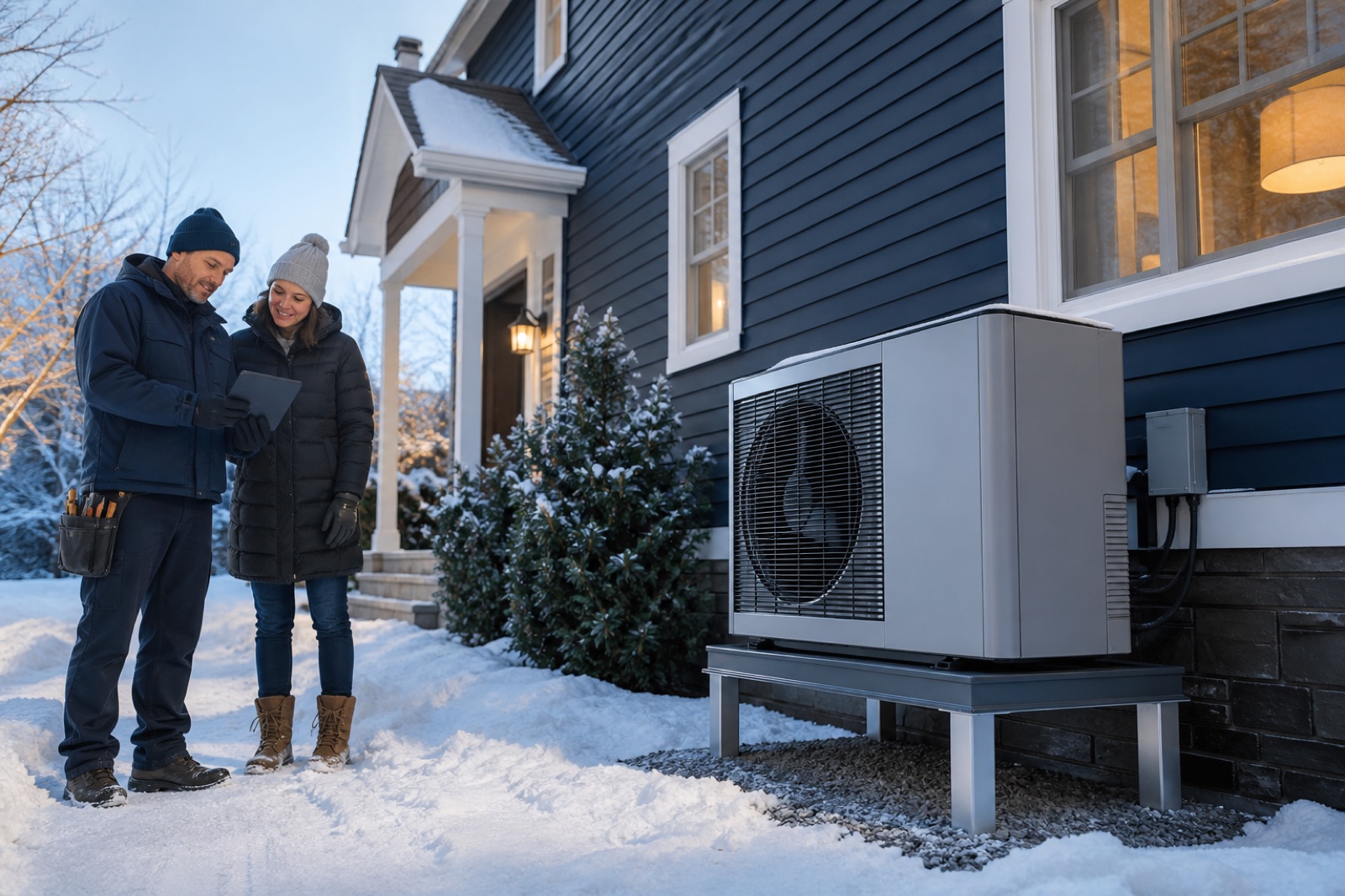
A replacement decision needs the home's heating load, current delivered fuel price, existing equipment efficiency, proposed equipment performance at local design temperature, backup-heat strategy, electrical or fuel-service work, installation cost, maintenance and financing. Compare the same home and the same weather across alternatives. For a heat pump, use certified low-temperature capacity and efficiency plus the actual electric tariff. For a furnace or boiler, use delivered fuel cost and realistic seasonal efficiency. Keep the EIA outlook as dated market context, not as a shortcut for a full ownership-cost comparison.
Turn the forecast into a five-line household winter budget
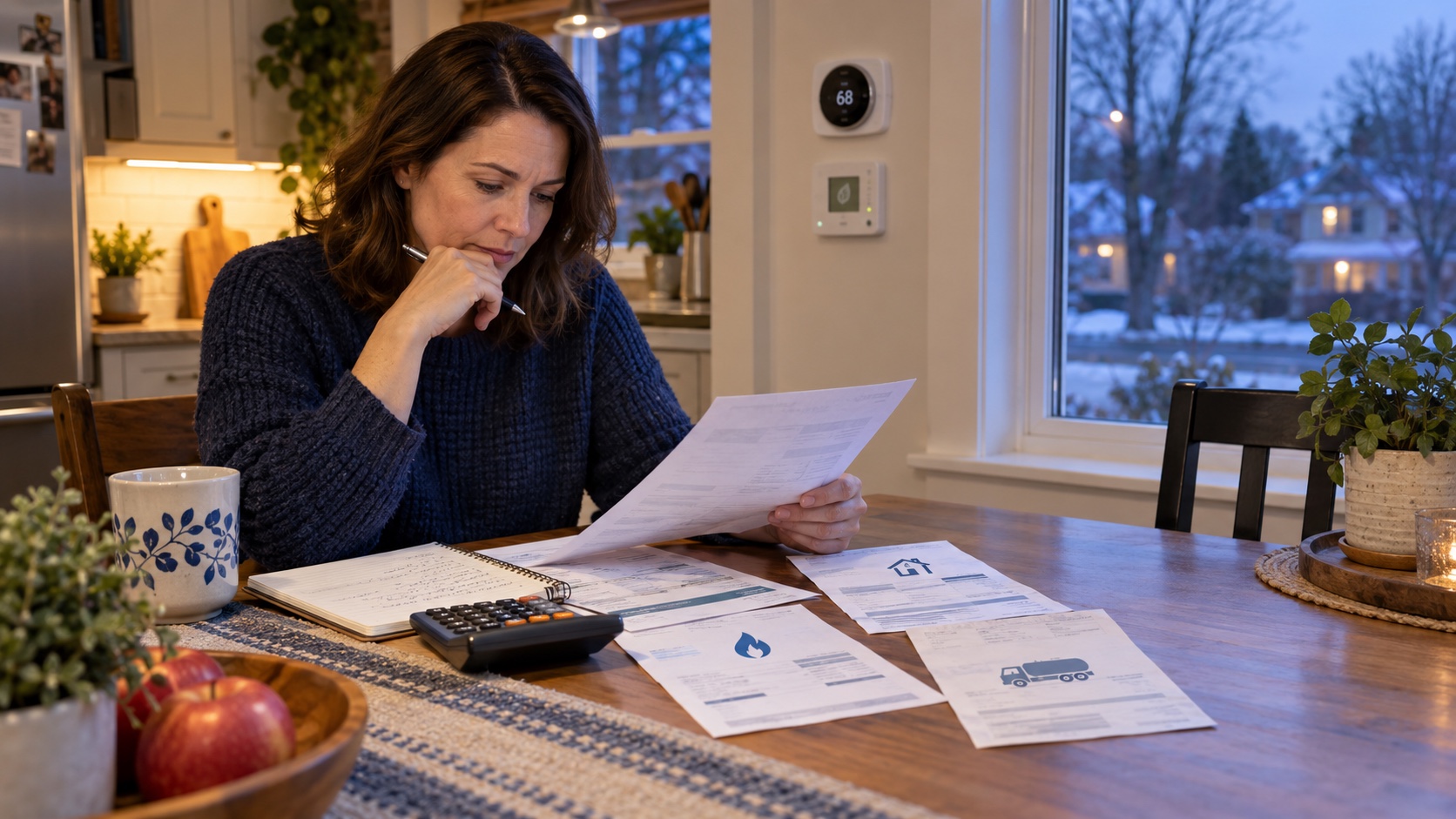
First, identify the main heating fuel and serving utility or fuel dealer. Second, collect the November–March bills from the last two winters and record billing days, delivered units and total paid. Third, separate fixed charges from usage-based charges where the bill allows. Fourth, note major changes in occupancy, thermostat settings, equipment, weatherization or fuel contracts. Fifth, run mild, base and cold cases using the same unit price structure and clearly labeled consumption assumptions.
For electricity, record kWh and the full bill rather than multiplying usage by an advertised energy-only rate. For natural gas, preserve therms, Ccf or Mcf exactly as billed and do not substitute the Henry Hub wholesale price. For propane or heating oil, include delivery date, gallons, fees and any prebuy or fixed-price contract because EIA assumes prevailing retail prices when fuel is used and does not model every household's advance purchase. The result is a planning range. It cannot know future weather, outages, emergency deliveries, tariff adjustments or equipment failures.
Use the fuel-specific signal to decide what to verify now
Electric-heated households should verify the current tariff, any time-of-use periods and the role of resistance backup heat before accepting a winter-cost estimate. Heating-oil households should check tank level, delivery terms and a safe service plan early; EIA attributes its 21% spending increase largely to higher oil and distillate prices, while forecasting a milder Northeast winter that partly offsets the price effect. Propane households should compare delivered quotes and contract terms rather than assuming the national 3% decline will appear locally. Natural-gas households should review the utility's current purchased-gas adjustment and fixed charges instead of treating lower wholesale-market pressure as an immediate retail-rate cut.
Across fuels, address safety and reliability before chasing a forecast saving. Schedule qualified service where combustion, venting, refrigerant, high-voltage work or unsafe operation is involved. Check filters and accessible controls according to manufacturer guidance, but do not bypass safeties or improvise temporary heat with ovens, grills or unvented equipment. If a household is already at risk of disconnection or cannot maintain safe temperatures, use the utility's official assistance route and the state, local or Tribal LIHEAP office; eligibility and available funding vary and CoolCompare cannot approve assistance.
Update the plan when measured winter data replaces the forecast
EIA says it will revise the Winter Fuels Outlook alongside later monthly outlooks. Preserve this October 6 release as the original forecast, then compare later revisions without overwriting the earlier assumption. During the winter, update the household record with actual billing days, fuel units, total cost and weather context. A higher bill can result from price, usage, fixed charges or a combination; percentage change alone does not identify the cause.
At season end, compare forecast, household plan and actual result in separate columns. Record equipment faults, service calls, thermostat changes and envelope work that affected consumption. That evidence is more useful for the next repair, replacement or weatherization decision than a national average by itself. CoolCompare's bill checker can organize the household inputs, the running-cost calculator can test transparent scenarios and Project Passport can retain the assumptions and outcome locally without turning them into a public claim.
How this guide was produced
CoolCompare Editorial reviewed 5 linked evidence sources and separated source facts from homeowner checks, calculations and limitations. This page does not claim hands-on product testing, professional inspection or address-specific verification unless the article explicitly documents it.
Reviewed 7 October 2026. See the editorial policy, fact-checking standard and corrections process.
Sources and further reading
Questions or corrections? Contact the editorial team.