Measure the room—not just the outdoor forecast
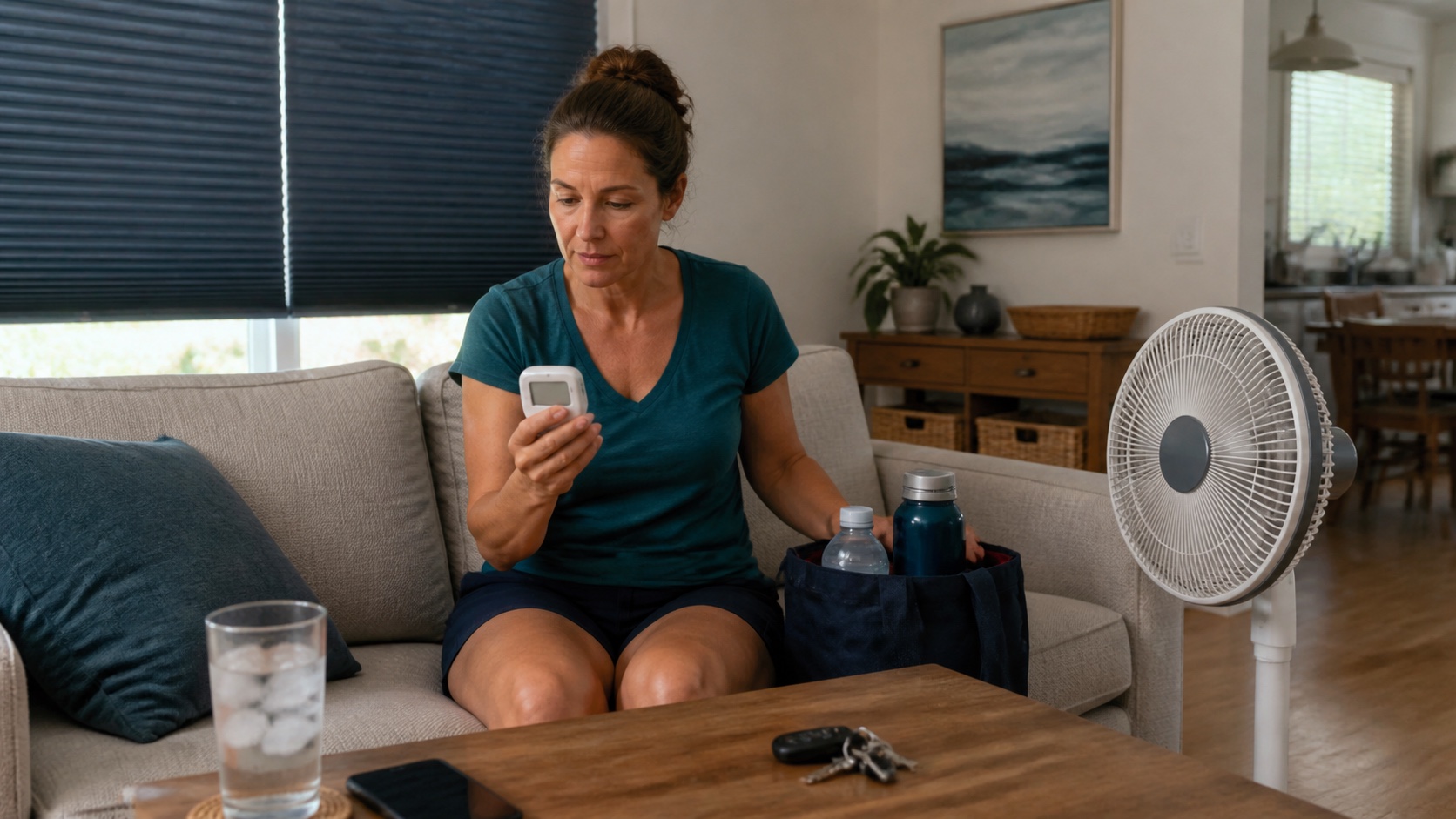
A portable or ceiling fan moves air across the body; it does not lower the room's air temperature. CDC's July 20, 2026 heat guidance says to use fans indoors only when the indoor temperature is below 90°F, warning that a fan can increase body temperature above 90°F. EPA's August 17 update says not to use an electric fan for cooling when the room is in the mid-90s or higher because it will not prevent heat-related illness.
Those statements are not a promise that every room below one number is safe. Humidity, direct sun, health, age, medication, hydration and how long someone is exposed all matter. A practical household plan should use an indoor thermometer, monitor the people in the room and treat CDC's lower threshold as the earlier point to change strategy—not wait for the room to reach the EPA's higher no-fan boundary.
Use a three-step escalation before the room becomes unsafe
First, reduce heat gain: close shades over sunlit windows and avoid adding indoor heat. EPA advises keeping windows closed when outdoor air is hotter than indoor air, then opening them when outdoor air becomes cooler. Check outdoor air quality before bringing that air inside; smoke or other poor air can make open-window ventilation the wrong choice.
Second, when the room is still below the fan-use limit, use the fan for people rather than leaving it running to 'cool' an empty room. Third, do not make a fan the only backup plan. Identify an air-conditioned destination in advance and arrange transport, especially for older adults, infants, people with chronic conditions, people living alone and anyone relying on temperature-sensitive medicine or powered medical equipment. CDC points households to local health or emergency-management agencies and 2-1-1 where available.
Treat an outage as a cooling and carbon-monoxide plan
Write down where the household will go if air conditioning stops, which neighbors need a check-in, how phones and medical devices will be powered, and what will happen to refrigerated medicine. EPA recommends battery lights rather than candles when possible. These are preparedness steps, not a claim that an outage or heat emergency is occurring at the reader's address.
Never operate a fuel-powered portable generator in a home, garage, shed or similar enclosed space. EPA says outdoor generators should be at least 20 feet from buildings and used according to manufacturer instructions; keep them dry. If a carbon-monoxide alarm sounds or someone develops possible CO-poisoning symptoms, move to fresh air and call for help. Call 911 for heat-related illness. CoolCompare does not provide live emergency monitoring or medical advice.
How this guide was produced
CoolCompare Editorial reviewed 3 linked evidence sources and separated source facts from homeowner checks, calculations and limitations. This page does not claim hands-on product testing, professional inspection or address-specific verification unless the article explicitly documents it.
Reviewed 2 September 2026. See the editorial policy, fact-checking standard and corrections process.
Sources and further reading
Questions or corrections? Contact the editorial team.